The Sun Temple of Modhera is located at Modhera in Gujarat.
Modhera Sun Temple is famous for its architecture. It Temple was built by King
Bhimdev of Solanki Dynasty in 1026. Solankis were known as suryavanshi. This
temple is known as 11th century sun temple.

This temple is designed as first
ray of the sun fell on the image of sun. Modhera's sun Temple's architecture is
similar to the Konark Sun Temple.The Sun temple is a unique architecture and
has three separate, axially aligned and integrated elements: Surya Kund, Sabha
Mandap and Guda Mandap.

The structure comprises of intricate carvings and designs
that brighten up the temple at dawn when the first rays of the sun hits the
area. The intricate designs of the Solanki architecture are perfect to every
minute detail and reflect rare craftsmanship. The exclusively carved temple
complex and the magnificently sculpted kund are jewels in the art of masonry of
the Solanki period apparently which was also known as the Golden Age of
Gujarat.

The Surya Kund is the first of three distinct components of
the temple complex. To the west lies the Sabha Mandap or primary hall and
beyond is the main temple — all laid out as on an east-west grid. The temple
complex, which is built on the Tropic of Cancer, is designed such that the
first rays of the sun fall on the main idol at the time of the equinoxes. The entire temple is based on a lotus-base plinth, lotus
being the Sun God's favourite flower. It is designed in such a manner that the
rays of the rising and setting sun on the days of equinox directly falls on to
the pure gold idol of Sun riding on his chariot driven by Saarthi (chariot
driver) Arun. The Sun God's chariot has seven horses and his saarathy sits on
the fourth.

The northern side of
the tank and make our way to the centre of the western edge. Steps lead up to
the Sabha Mandap, an octagonal hall between the water tank and the main temple.
At the top of the steps are the remnants of a huge arch or Toran that lead to
the main hall, the Sabha Mandap. There are 52 pillars in the hall, denoting the
52 weeks in a year.

Every pillar, including the Toran, is intricately carved.
Starting with a simple octagonal base that showcases a small deity set in an
arch on each face, the pillars are formed of geometrical patterns surmounted by
exquisitely carved dancing nymphs, above which octagonal panels display scenes
from the Ramayana and the Mahabharata.

At the centre of the hall is an arched
ceiling carved like an inverted lotus flower. The detailing is marvellous.
Beyond the Sabha Mandap is the main temple or the Guda Mandap, which is no
longer used. The absence of the main idol —believed to be a golden Surya on his
chariot, in no way detracts from its beauty.

The exterior walls of the temple
are replete with carvings — including twelve postures of Aditya or the Sun god.
Like many other temples in India, the walls depict divine as well as the daily
lives of people, including a good deal of beautiful sculptures.

The temple complex
is being well maintained by the ASI, with some renovations done in recent
times. For the historically inclined, the onsite museum has numerous sculptures
and other stone work on display.

The 52 pillars adding grace and poise to the temple section.
each panel in turn and witness the intricate details encompassing thepanels
speaking and sharing about their costumes, jewelry, performing arts, erotica
and the intensely enigmatic art of making love, medicinal plants, and the
pharmacopoeia etched in stone.
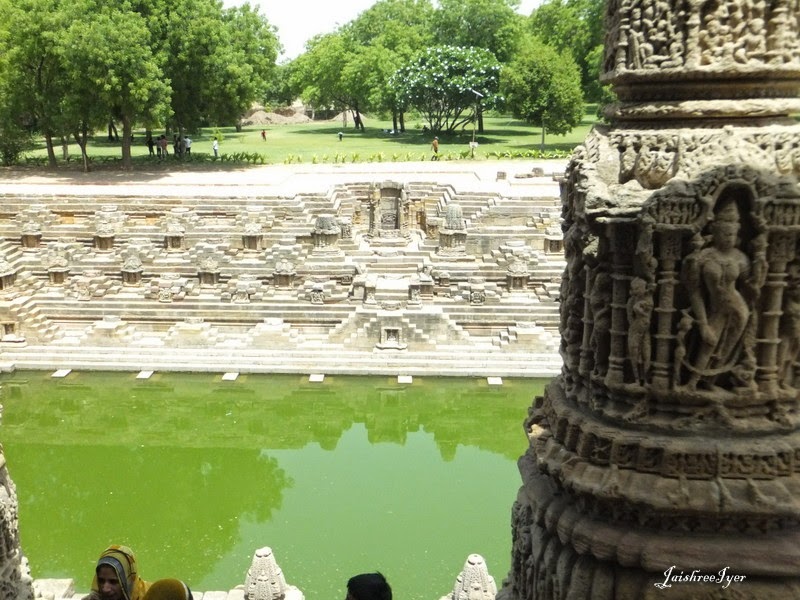
Suryakunda, also known as
Ramakunda, is a rectangular stepped tank that is used to store pure water.
Devotees use the tank to perform Surya namaskar and other ceremonial ablution
before worshipping the sun god. It is one of the best visible examples of the
designers' sense of geometry.

Besides comprising a series of stone steps that
culminate into the fresh water, the structure also embodies 108 miniature
shrines carved in between these steps. The 108 shrines are synonymous to the
108 beads of the Hindu rosary.

This is called the main temple or the sanctum
sanctorum. The entry to the temple is decorated by two huge ornamental arches. Another
notable work of marvel is the sculpted exteriors.

The exteriors are decked with
12 different postures of Adityas - Sun God along with eight Dikpals, Lord
Vishwakarma - who constructed Golden Dwarka city for Shri Krishna, Varundev - God
of Water, Agnidev - God of Fire, Ganesh - God for starting, Mata Saraswati -
Goddess of Education & Wisdom. The sculptures also depict erotic art that
was typical of Hindu, Jain and Buddhist architectures.

Overall it was an eye opener on many things about our
culture, scientific knowledge etc. It actually mesmerises you by the tech know
that our ancestors had, precise calculations,impossible viewing angles defying
the line of light. Its techno historic marvel.

The place is neat and quite well
maintained. Some of the carvings are amazing. The historical stories about the
temple are very interesting. There is a lake in pond in front and a lovely
garden all around and also a museum if one has the time. Definitely worth
visiting.


