The way to Coffee-Exploring Coffee Plantations Coorg
Many people love coffee, and I am a coffee Lover.The first sip in the morning is a heavenly experience tantalizing the taste buds in a whirl of decadent flavours, rolling through their tongue, and introducing new sensations to their senses of smell and taste. Good coffee soothes your stomach, the host of the majority of your arteries and delivers an excitable feeling to the rest of your body
It first starts with infatuation, but as you get to know it more and more, you begin to love the drink, the smell, the taste, the way it is made, the way it looks, where to drink it, how it all started –To know more we visited Coffee Plantations.

Exploring Coffee Plantations while our visit to Coorg was not on the list. But as suggested by our driver, we headed towards one of the private properties that he was aware of. He introduced our group to the guide of the property in Madikeri. Madikeri is known for its resplendent coffee plantations and green meadows sprawling over acres of land. The area is popular for its premium class coffee beans. One of the best activities to do in Madikeri is to take a walk through these gorgeous coffee plantations.
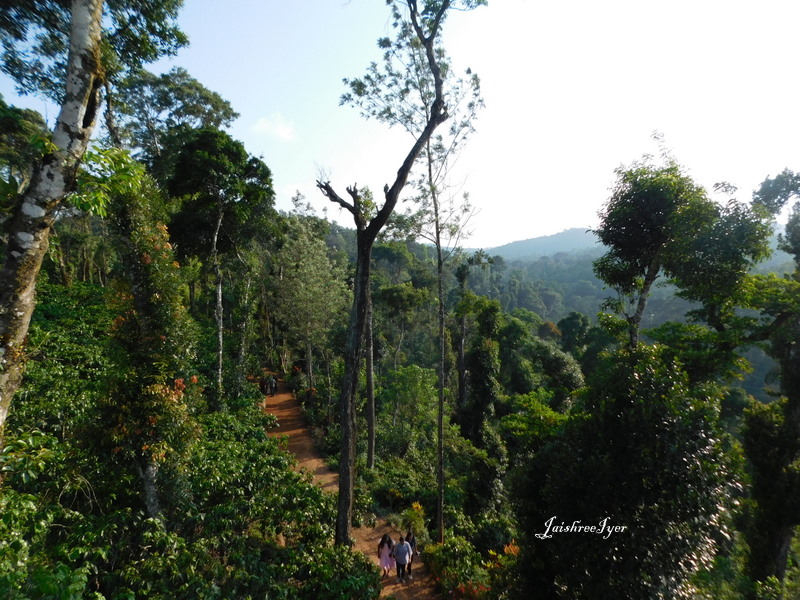
Evergreen forest in Coorg sustaining the Life of Coffee
We always heard that Coorg is famous for its coffee and spices. But rarely did we have any idea and insights about it. The host seemed to be kind and generous about the work and efforts they are putting into creating these coffee plants. We started following him as he introduced us to the quiet piece of heaven in the midst of hilly regions.

Coorg is most popularly nick- named as the 'Coffee Cup of India'. The mountainous area of Coorg is strongly reminiscent with the blend of the aroma of fine Arabica and Robusta and they are supposed to be the world's best coffee.
History of Coffee in India
The history of coffee in India is nearly four hundred years old and it belongs to the 17th century. History tells it that in 1670, a Muslim pilgrim named Baba Budan snuck seven coffee beans in his beard aboard a ship to India. Upon arrival, he planted these beans in the Chikmagalur region near Coorg in Karnataka. At this time, it was illegal to transport green coffee beans outside of Yemen, and the ports were strictly monitored in an effort to maintain a monopoly on local coffee production and trade.

Baba Budan was not only successful at sneaking them out of Yemen but also successfully planted them in Chandragiri Hills. Legend has it that the Baba had his friends carry the beans with them and plant them wherever they went, mostly in gardens and backyards. Coffee production prospered in Chandragiri Hills over the next century. However, the bean didn’t spread throughout other parts of India until the 19th century, when coffee started being exported for trade. Coffee now flourishes in Karnataka, where the slopes of the Western Ghats are brought to life with the fresh aromas of arabica and robusta plants.
The first thing he showed us were the two main varieties of coffee. Varieties of Coffee:
They separate both the species with a road in between so as to differentiate between them properly. There is a major difference between their size, taste, and type of growth.
1. Arabica:
Arabica has a softer, sweeter taste and it grows at a height of 7-8 feet. The berries grow randomly on its small stems with soft branches. The maintenance cost of Arabica is greater than the other variety as the insects affect it more due to its small and soft stem.

2. Robusta:

Robusta contains higher caffeine resulting in a bitter taste. It stands more than 10 feet with harder branches and big stems. The berries of Robusta grow in clusters.
Growth of the Coffee Plantations in Coorg:
Arabica is superior to robusta in the markets which creates more demand for Arabica. It counts for 70% of the production while Robusta counts only 30%. Both species yield 2 crops per year. The lifespan of a coffee plant is 30-35 years. When it starts from a bean, it takes 3-4 years for the first yield and then every year ahead.
Coffee Plantations
The first flower buds start growing in the branches in February and March. There is a term for the first rain that falls on these coffee buds, called the “Coffee rain”.
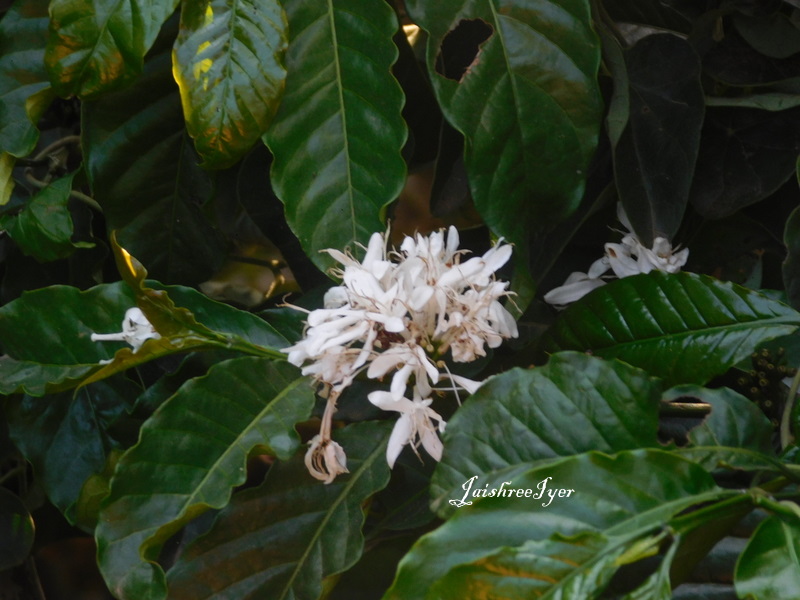
Coffee Flowers
Can you smell the flowers? Doesn’t it smell like jasmine?”, my guide asks me. He is right. I notice a discernible scent of jasmine permeating the air as we walk through rows of blossoming coffee trees. “When the coffee trees are ripe, they have small, white flowers that smell like jasmine.” The rows of arabica and robusta trees hang heavy with burgundy-colored fruit and delicate white flowers. Interspersed among the blossoming coffee trees are ladders of pepper vines climbing into the sky.

He explained when the coffee rain starts pouring, the flowers start blooming from the buds. These white-colored coffee flowers depict jasmine flowers in their appearance and smell. They are visible only 2 days in a single year. After the flowers bloom, the next day itself they will dry and fruit buds start opening from them.
The fruit buds start growing bigger. First, there will be green color berries which further turn yellowish. After a few days, they turn into crimson red color berries. These crimson red berries are the perfect ones to harvest.

After harvesting the crimson red
berries, inside there will be two beans. They use these beans for coffee and
the outer cover called musk as a compost. The beans are then dried, roasted and
finally red Crimson Red Coffee Berries.

They plant trees that grow huge after some years and form a dense forest to provide shed for the coffee plants. Coffee plants need 40% of the shed to grow rich. for serving into a cup.
Kopi Luwak – the world’s most expensive coffee is also found here.
This is a Civet Cat that consumes the selected coffee berries and it removes the outer cover. The beans along with mucilages pass into its digestive system. It mixes with all the enzymes and nutrients which ferment the beans and they will defecate it. The defecated material along with other fecal matter is collected and sold as Kopi Luwak coffee.

A cat’s poop serving as a coffee. Strange, isn’t it? Evolve Back hosts a coffee tasting for its guests to try different roasts and ways to brew coffee, from cappuccino to Vietnamese, and including India’s very own coffee, known as Kaapi. Amid the thick green coffee plantations and the stirrings of the surrounding jungle, the barista carefully pours steaming cups of Kaapi.
Spices in the Coffee Plantations of Coorg:
The mainland of Indian coffee is distinguished for its featured monsoon-fed coffee which is mostly grown in the shades of huge Rose Wood, Wild Fig and Jack Fruit trees. The place is not only ideal for coffee but also promotes distinct eco-system for it is the home for great birds and animals like the Great Indian Pied Hornbill and the Giant Malabar Squirrel which are attracted by the fruit laden trees with rare flavors and aroma.

Coorg coffee encourages other cultivations like pepper, cardamom, vanilla, orange and banana.. It also promotes intercropping like Pepper, (You can see different types of pepper such as white, green and black pepper). Cloves, Cardamom, Kokum (Garcinia cambogia) and Cinchona paving way for a spice country.

Coorg cultivates all of its coffee under a well-defined two-tier mixed shade canopy, comprising evergreen leguminous trees.

The displays extended by the coffee plantations are just beyond one’s imagination and one must not date to miss out on a chance to tour them. Though the robusta beans are tall and can be spotted from anywhere, the arabica is short shrubs. If you are looking for a soulful retreat then this is one of the most scenic places where you can tour the coffee plantations and also stay amidst them.

I spent hours to meandering through thick growth of native trees, vanilla, turmeric, cinnamon, ginger, and black pepper crops; and coffee trees heavy with ripened arabica and robusta beans.
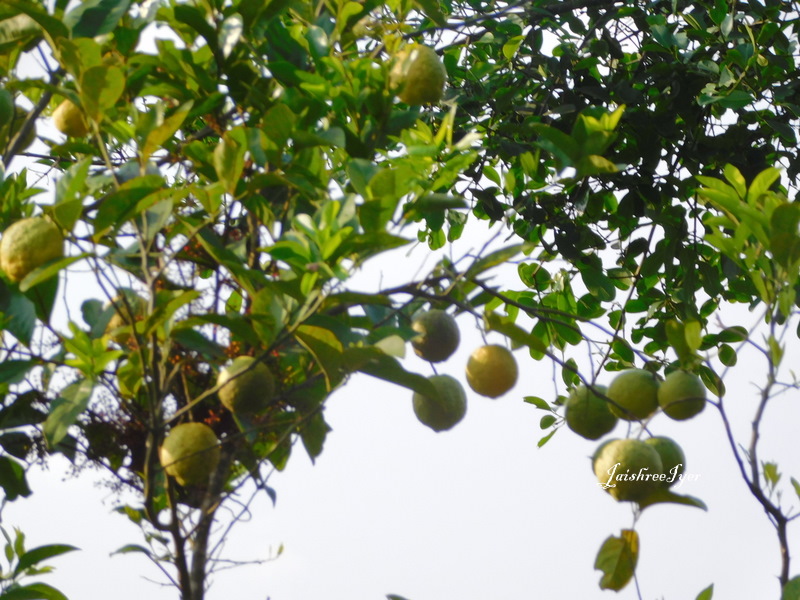
The growth of the rainforest canopy is left natural, allowing for the fungi, spiders and insects native to the ecosystem to their important role in the ecological coffee and spice farming in this region. There are two different climates in Coorg—rainforest and dry, temperate forests—both of which are friendly for coffee growing conditions.

With a tour to the lush green trails of coffee plantations of Coorg, you can learn about the robusta & arabica beans that are grown in the region. Right from the process of selecting the riped coffee beans to the process of harvesting them, here, you can know about everything at once. The experience of touring the coffee estate is one of its kind as the breath-taking views along with the soothing vibe are just the right dose for the visitors!
While returning they gave a cup
of coffee I couldn’t resist tasting the smooth, flavourful specialty. I savoured
the few sips my taste buds were spinning. I was experiencing flavours I allowed
myself to indulge in, when the coffee cooled the flavors transformed into
something completely different


